
2026-09-18 · Pete Jensen
What Gets Wet in a Finished Basement and What Needs Drying?
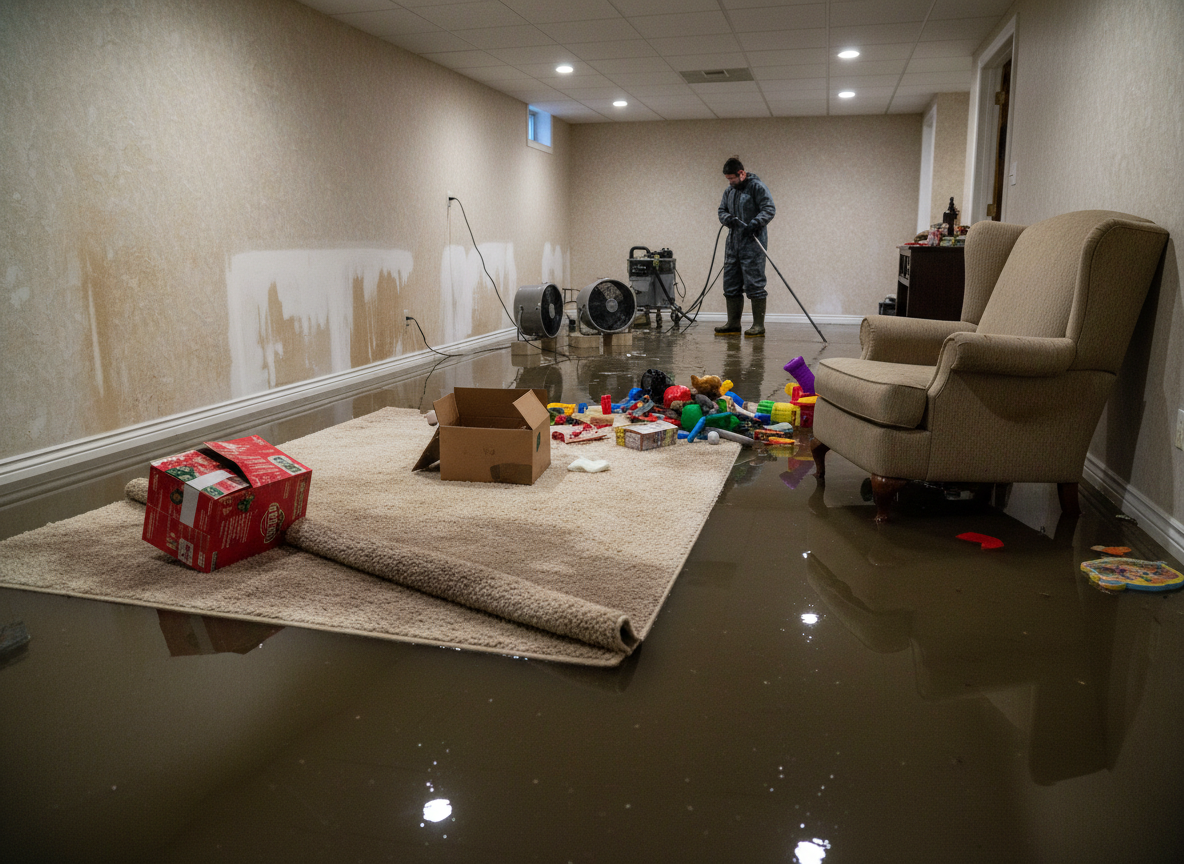
In Fargo finished basements, drywall up to 24 inches above the water line, carpet padding, fiberglass batt insulation, and baseboard trim typically get wet and require removal or thorough drying within 48 hours. Wood framing and subfloors can retain moisture longer and need moisture meter checks before restoration proceeds.
Materials That Absorb Water Fastest
Water from Red River flooding or heavy spring snowmelt first saturates carpet padding and drywall in neighborhoods such as Hawthorne and Northport. These porous layers hold 4–6 gallons per 100 square feet, feeding mold growth when temperatures rise after a blizzard. Electrical outlets and low-voltage wiring also contact moisture, creating hidden corrosion points that surface weeks later in homes near the Fargodome. Removing wet padding immediately prevents it from wicking into subfloors common in 1960s–1980s Cass County construction.
Insulation and Framing Concerns
Fiberglass and cellulose insulation in exterior walls along Island Park and West Acres retain water against concrete foundations that already face seasonal freeze-thaw cycles. Wet insulation loses R-value and must be cut out 12–18 inches above the water mark. Dimensional lumber studs can swell and twist if left above 18 % moisture content, especially after warm summer thunderstorms follow a cold winter. Checking every cavity with a pin meter reveals pockets that air movers alone cannot reach.
Flooring and Subfloor Drying
Engineered hardwood and laminate in finished spaces near Prairie Rose or Woodhaven trap water between the surface and plywood underlayment. Removing the top layer allows direct airflow across the subfloor for 3–5 days. Concrete slabs in South Fargo basements hold surface moisture that evaporates slowly; dehumidifiers rated for 70-pint daily extraction keep ambient levels below 50 % RH. Skipping this step leads to cupping when humidity spikes again during July storms.
Electrical and Mechanical Components
Outlet boxes, switches, and furnace ducts located within 12 inches of the floor in Downtown Fargo homes collect sediment that holds moisture. These items need cleaning and drying before circuits are re-energized to avoid shorts. Sump pump discharge lines and HVAC condensate drains also become pathways for water to re-enter finished areas after heavy rain events. Finished Basement Water Damage Cleanup outlines the sequence for safely handling these systems.
Timeline and Monitoring Steps
Begin extraction within the first 6 hours, then run commercial air movers and dehumidifiers for 48–72 hours while logging moisture readings every 12 hours. In North Fargo homes with older plaster walls, allow an extra day because plaster releases moisture more slowly than drywall. Follow-up checks at 7 and 14 days catch any rebound from hidden cavities created by spring snowmelt. How Spring Snowmelt Can Lead to Basement Water in Fargo explains seasonal timing that affects these drying windows.
When to Call for Professional Equipment
Homeowners in Roosevelt/NDSU or River Drive areas often attempt box fans, but these units lack the static pressure needed to pull moisture from wall cavities. Professional desiccant or LGR dehumidifiers maintain 30–40 % RH even when outdoor dew points climb after warm summer fronts. Why Fargo Basements Flood After Heavy Rain and Sump Pump Problems details how local soil and grading conditions change the volume of water that must be removed.